Correct Answer

verified
• Continuity of the investor's proprieta...View Answer
Correct Answer
verified
View Answer
B) False
Correct Answer
verified
Correct Answer
verified
B) False
Correct Answer
verified
Correct Answer
verified
Correct Answer
verified
Grossed-up basis of recently purchased s...View Answer
Correct Answer
verified
View Answer
A) The acquired corporation in a Type C reorganization may retain its corporation charter.
B) Alpha Corporation acquires 100% of the assets of Beta Corporation in exchange for $75,000 of Alpha stock and $25,000 in cash. Beta is subsequently liquidated. This exchange qualifies as a Type C reorganization.
C) Alpha Corporation acquires 100% of the assets of Beta Corporation in exchange for $75,000 of Alpha stock and the assumption of $25,000 of Beta liabilities. Beta is subsequently liquidated. This exchange does not qualify as a Type C reorganization.
D) All of the above are false.
F) None of the above
Correct Answer
verified
Correct Answer
verified
Correct Answer
verified
Although the motivation for the tax-free...View Answer
Correct Answer
verified
View Answer
B) False
Correct Answer
verified
Correct Answer
verified
A) Ann, Dewey Corporation's sole shareholder, exchanges her Dewey stock having a $400,000 FMV and a $175,000 adjusted basis for $350,000 of Heider Corporation stock and $50,000 cash. Ann realizes a $225,000 gain on the stock transfer, none of which is recognized.
B) A Type B reorganization can be accomplished without formal shareholder approval.
C) The target corporation's tax attributes are lost in a Type B reorganization.
D) All of the above are false.
F) C) and D)
Correct Answer
verified
Correct Answer
verified
A) will have a holding period for assets beginning on the day after the acquisition date.
B) must use the preacquisition tax year.
C) will no longer file a separate return.
D) is considered to be a continuation of the old target corporation for purposes of the tax attribute carryover rules.
F) All of the above
Correct Answer
verified
Correct Answer
verified
A) stock whose adjusted basis is determined by its basis in the hands of the person from whom it was acquired.
B) stock acquired from a decedent.
C) stock acquired in a tax-free reorganization.
D) All of the above are correct.
F) A) and C)
Correct Answer
verified
Correct Answer
verified
A) Class I: cash, demand deposits, and similar accounts in banks, savings and loan associations, etc.
B) Class II: actively traded personal property such as publicly traded securities
C) Class III: covenants not to compete, similar restrictions on trade, etc.
D) Class IV: inventory or other property held primarily for sale to customers
F) All of the above
Correct Answer
verified
Correct Answer
verified
A) A taxable acquisition of the assets of a target corporation that is subsequently liquidated, results in a loss of the target corporation's tax attributes.
B) A taxable acquisition of the assets of a target corporation, that is subsequently liquidated, results in the target corporation's shareholders recognizing gain or loss on the surrender of their target stock.
C) An acquiring corporation in a tax-free or a taxable acquisition transaction does not recognize gain or loss when its stock is issued in exchange for property.
D) An acquiring corporation in a taxable acquisition transaction must acquire all of the assets and liabilities of the target corporation.
F) B) and C)
Correct Answer
verified
Correct Answer
verified
A) June 30 of this year.
B) November 30 of this year.
C) August 15 of next year.
D) June 30 of next year.
F) A) and D)
Correct Answer
verified
Correct Answer
verified
Correct Answer
verified
Correct Answer
verified
Correct Answer
verified
Marty must recognize $6,000 of...View Answer
Correct Answer
verified
View Answer
A) Able Corporation (New York) transfers its assets to Able Corporation (Delaware) in exchange for all of its stock. Able Corporation (New York) is liquidated. This exchange is a Type F reorganization.
B) Strict adherence to legislative guidelines with regard to reorganizations is sufficient for tax-free treatment.
C) A suitable business purpose for a tax-free reorganization is to permit the minimization of shareholder taxes.
D) All of the above are false.
F) C) and D)
Correct Answer
verified
Correct Answer
verified
A) 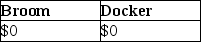
B) 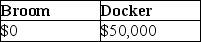
C) 
D) 
F) A) and C)
Correct Answer
verified
Correct Answer
verified
A) A Sec. 338 election usually triggers taxation to the target corporation.
B) A Sec. 338 election must be made not later than the fifteenth day of the ninth month following the first stock acquisition in a series of acquisitions that leads to 80% or more stock ownership.
C) When a Sec. 338 election is made, the target corporation is treated as having sold all of its assets at their FMV at the close of the acquisition date.
D) In a Sec. 338 deemed sale election, the shareholders of the target corporation sell their stock to the acquiring corporation.
F) A) and B)
Correct Answer
verified
Correct Answer
verified
Correct Answer
verified
The lesser of Target's NOL carryover ($1...View Answer
Correct Answer
verified
View Answer
A) In a tax-free reorganization, the acquiring corporation's holding period for the acquired properties includes the period of time the target corporation held the properties.
B) In a tax-free reorganization, if the acquiring corporation uses nonmonetary boot property, gains or losses will be recognized by the acquiring corporation.
C) The receipt of cash by a shareholder results in the recognition of all of his or her realized gain even if the transaction qualifies as a tax-free reorganization.
D) All of the above are false.
F) A) and B)
Correct Answer
verified
Correct Answer
verified
Showing 41 - 60 of 99
Related Exams